Dairy Development
Why focus on Dairy Development?
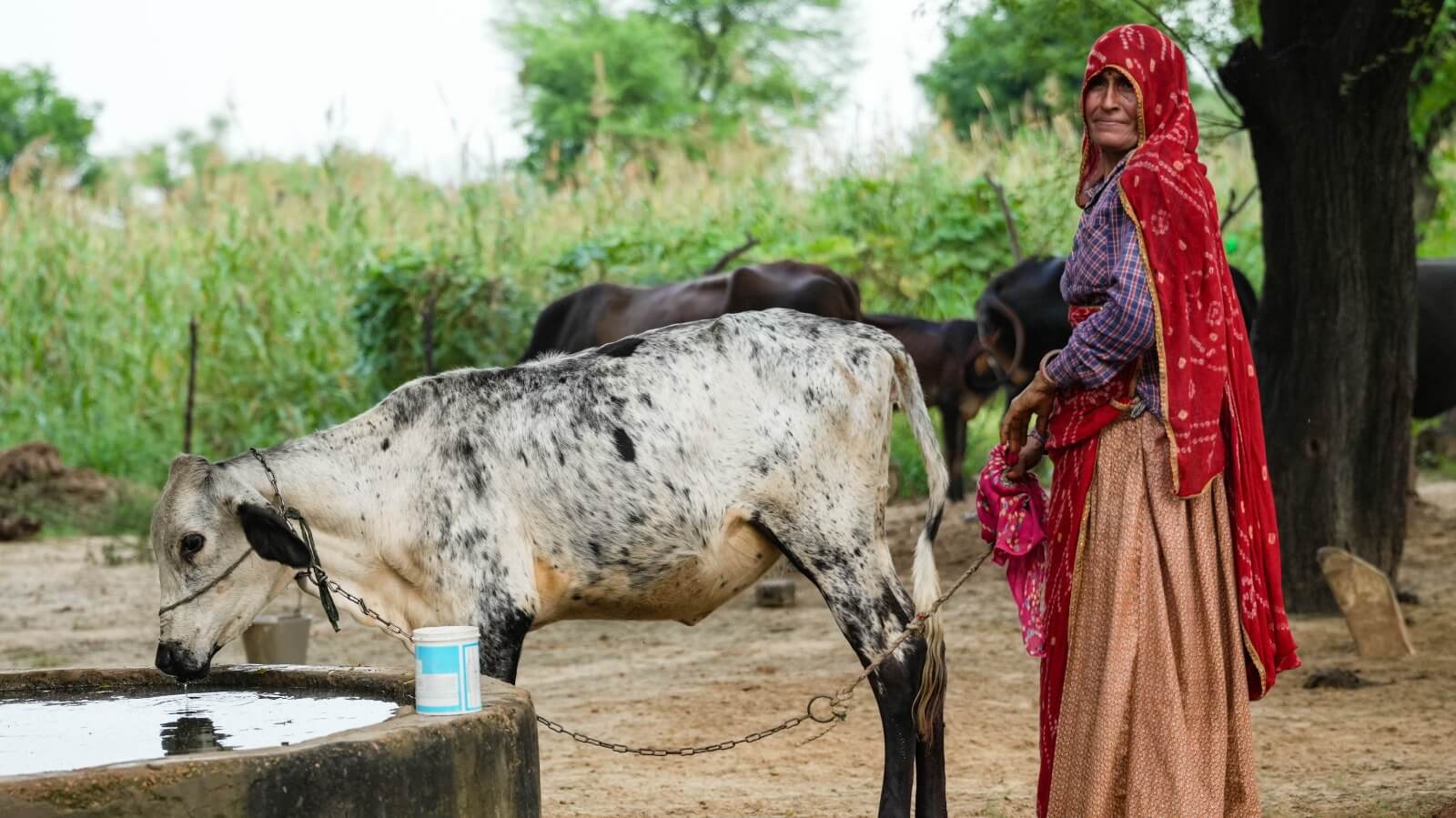
India’s dairy sector is a cornerstone of rural livelihoods, supporting over 80 million small and marginal farmers. As the world’s largest milk producer, contributing nearly 25% of global production, India produced approximately 247.87 million tonnes of milk in 2024–25, reflecting steady growth of around 5–6% annually.
Despite this scale, the sector remains constrained by low productivity, with average yields of 5–6 litre/day, significantly below global benchmarks. Key challenges include feed and fodder deficits, high input costs, limited access to veterinary services, and gaps in scientific herd management. Additionally, weak market linkages, dependence on informal channels (55–60%), and climate stress further affect farmer incomes and sustainability.
Yet, dairy continues to offer regular income, nutritional security, and livelihood stability, making it a critical buffer against agricultural uncertainty. With growing demand, the sector presents strong opportunities for productivity enhancement and value chain strengthening.
In this context, End Poverty works as a catalyst, supporting smallholder farmers through improved access to services, capacity building, and institutional strengthening. By focusing on better nutrition, animal health, breed improvement, and FPO development, the approach enables farmers to transition towards stable, market-linked, and sustainable dairy livelihoods.
References
- Basic Animal Husbandry Statistics (BAHS), DAHD, Government of India
- National Dairy Development Board (NDDB) Reports
- “Status and Challenges of Dairy Farming in India: A Review”, International Journal of Agriculture Extension and Social Development, 2025
Join the Movement
If Dairy Development seems close to your heart there are different ways you can contribute and support us in our projects!
Our Projects On Dairy Development
Shwetdhara Programme
Project Overview
Shwetdhara is a dairy productivity and rural livelihood initiative designed to strengthen the incomes of smallholder women dairy farmers through improved practices, better herd management, and reliable last-mile extension services. Implemented by End Poverty in Jaipur and Sikar districts of Rajasthan, the programme focuses on enabling households to achieve higher milk productivity and more stable, predictable incomes.
Despite India being one of the largest milk producers globally, smallholder farmers continue to face challenges such as low-yielding cattle breeds, limited access to veterinary services, and inadequate nutrition management. Shwetdhara addresses these gaps through an integrated, service-driven approach, combining artificial insemination, doorstep animal healthcare, input supply, farmer training, and institutional strengthening through Farmer Producer Companies (FPCs).
Operating across 280 villages in 7 blocks, the programme has built a strong grassroots ecosystem supported by Gram Sakhis and extension services, ensuring consistent engagement and service delivery at the community level.
Impact Highlights (FY 2025–26)
- 280 villages covered across 7 blocks in 2 districts, reaching 16,414 farmers
- 11,338 Artificial Inseminations (AI) conducted, improving breed quality and productivity
- 1,151 doorstep veterinary treatments and 72 cattle health camps conducted, strengthening animal health services
- ₹5.16 crore revenue generated by FPC, strengthening local dairy economy and market systems
- 1,182 farmer trainings and 1,103 member trainings conducted, driving adoption of improved dairy practices
- 548 shareholders mobilized, strengthening community ownership in FPCs
- 3,080 Gram Sakhis actively engaged, ensuring last-mile service delivery across all operational villages
- Strengthened institutional ecosystem through 7 PVKs (Procurement & Value Centres) supporting aggregation and services
Focussed Development Programme (Dairy)
Project Overview
The Focussed Development Programme (Dairy) aims to strengthen rural livelihoods by promoting sustainable and income-generating dairy practices among small and marginal farmers in Guna district. Implemented across 15 villages in Guna and Bamori blocks, the programme focuses on women, smallholder farmers, and rural youth, enabling them to adopt dairy as a reliable and scalable livelihood option.
Built on an integrated rural development approach, the programme combines capacity building, breed improvement, livestock health, fodder management, and institutional strengthening to enhance productivity and create self-sustaining community systems. Operating in an aspirational district facing challenges in agriculture and income diversification, the programme addresses critical gaps through targeted, community-driven interventions.
Impact Highlights (FY 2025–26)
- 250 farmers mobilized through group meetings and engagement platforms
- 12 villages covered under dairy capacity building and training
- 15 Sahayaks trained to strengthen last-mile service delivery
- 360 Artificial Insemination (AI) services delivered for breed improvement
- 90 sex-sorted AI interventions promoting higher female calf birth
- 170 cattle inducted to enhance household income and asset ownership
- 600 livestock health checkups conducted ensuring disease prevention
- 90 Azolla units established for low-cost, nutritious cattle feed
- 54 Napier grass units developed to ensure green fodder availability
Dinker Agriculture Producer Company Limited (DAPCL)
Project Overview
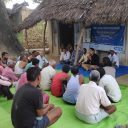
Dinker Agriculture Producer Company Limited (DAPCL) is a farmer-owned enterprise working to strengthen the dairy value chain by ensuring assured market access, fair pricing, and transparent procurement systems for farmers. Operating in Thara, Tijara Block of Alwar district, the initiative focuses on enabling smallholder dairy farmers to secure stable and predictable incomes through organized milk aggregation and diversified market channels.
DAPCL follows a direct procurement and aggregation model, integrating both bulk and retail sales channels to ensure consistent milk offtake. In addition to raw milk sales, the enterprise promotes value-added dairy products such as paneer, ghee, butter, and curd, enhancing revenue opportunities. The model emphasizes timely payments, quality-based procurement, and reduced dependency on intermediaries, thereby strengthening farmer confidence and participation in organized dairy markets.
Impact Highlights (FY 2025–26)
- 19,817 litres of milk procured directly from farmers, ensuring assured market access
- ₹10.65 lakh paid to farmers, strengthening income stability
- 7,788 litres sold through bulk channels and 12,028 litres through retail outlets, diversifying market access
- ₹4.71 lakh revenue from bulk milk sales and ₹7.37 lakh from retail milk sales
- ₹1.35 lakh revenue generated from value-added dairy products (paneer, ghee, butter, curd)
- Established a dual-channel sales model (bulk + retail) ensuring consistent demand and reduced market risk
- Strengthened a transparent procurement system with timely payments, improving farmer trust and retention
Clean Milk Production Practices Assessment (FAO Project)
Project Overview
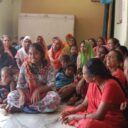
This initiative focused on assessing and improving clean milk production practices among smallholder dairy farmers through a baseline–endline study and behaviour change interventions. Covering 240 dairy households across 12 villages, the project introduced a Clean Milk Scorecard and multimedia-based training tools to promote hygienic practices, improve milk quality, and strengthen farmer awareness.
Impact Highlights (FY 2025–26)
- 240 dairy households covered across 12 villages, building a strong evidence base
- Average clean milk score improved by +39.7 points (98.5 → 138.2), indicating significant behavioural change
- Scorecard + photo + video model delivered highest impact (+60.3 points), establishing an effective behaviour change approach
- Strong improvement in hygiene practices — stainless steel cans (85 → 103), clean & dry buckets (76 → 110), milker hygiene (92 → 170)
- Improved milking & post-milking practices, including udder hygiene (20 → 37) and teat dipping (10 → 28)
- Better milk handling & safety, with improvements in storage (118 → 136) and filtration (112 → 124)
- Enhanced animal health practices, including vaccination (7 → 19) and disease management (30 → 50)
- Behaviour-based practices improved rapidly, while infrastructure adoption remained limited due to cost constraints