Education
Why focus on Education?
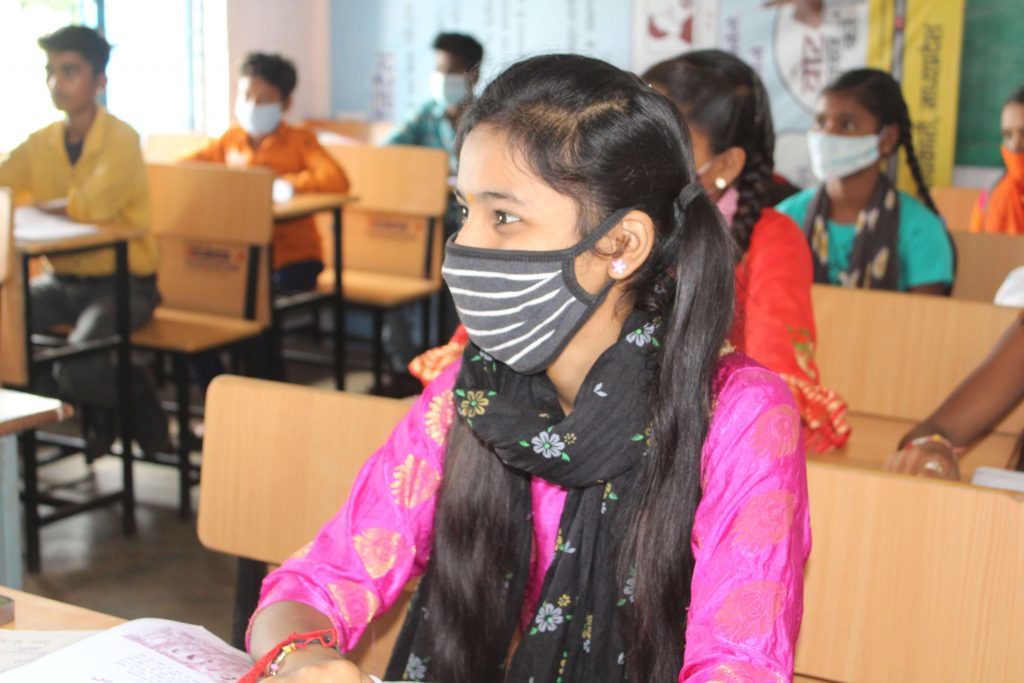
Education is a key driver of opportunity, yet access to quality learning in rural India remains uneven. While enrolment has improved, national reports such as ASER highlight persistent gaps in foundational learning, with many children struggling in basic reading and arithmetic. At the same time, data from UDISE+ shows that several schools still lack essential facilities like clean drinking water, sanitation, electricity, and functional classrooms, affecting attendance and learning outcomes.
These challenges are further compounded by limited access to digital resources and supportive learning environments, particularly in underserved regions. As a result, the issue is not just access to schools, but the quality and conditions of learning.
End Poverty addresses this by focusing on strengthening the school ecosystem — improving infrastructure, access to basic services, and learning environments. The aim is to create safe, inclusive, and functional spaces where children can learn effectively and build a strong foundation for the future.
Villages covered
People Impacted
Join the Movement
If that topic seems close to your heart there are different ways you can contribute and support us in our projects
Our Projects on Education

Transforming Education through Infrastructural Excellence
Project Overview
The project focuses on strengthening school infrastructure to create safe, functional, and technology-enabled learning environments in underserved regions. By improving access to basic facilities and integrating sustainable energy and child-friendly infrastructure, the initiative aims to enhance the overall quality of education and make schools more conducive for learning.
Interventions were carried out across schools in Ashok Nagar (Madhya Pradesh) and Nuh (Haryana), addressing critical gaps in electricity, sanitation, classroom infrastructure, and overall school environment, while promoting sustainability and improved student experience.
Impact Highlights
- 5 government schools strengthened in Ashok Nagar, with installation of 5KW solar power systems, ensuring uninterrupted electricity for classrooms
- 685 students benefited from improved access to reliable power, enabling better learning conditions and use of digital resources
- Infrastructure upgraded in schools in Nuh (Nizampur & Gundbas), including sanitation units, classroom repairs, and boundary strengthening
- Improved school safety, hygiene, and usability, creating more secure and student-friendly environments
- School beautification with plantation and play spaces, making learning spaces more engaging for children
- 428 students benefited from enhanced infrastructure and improved learning environments in Nuh
- Integration of clean energy and basic infrastructure improvements, supporting long-term sustainability and better educational outcomes

Transforming Education through Infrastructural Excellence – Kadarpur School
Project Overview
The initiative aims to transform Government Senior Secondary School, Kadarpur into a safe, inclusive, and digitally enabled learning environment by addressing critical gaps in infrastructure and learning resources. Despite catering to a large number of students, the school faces challenges related to inadequate sanitation, lack of reliable drinking water, and limited access to digital and creative learning spaces, which impact both student well-being and learning outcomes.
Aligned with an integrated approach, the project focuses on strengthening the overall school ecosystem through improvements in infrastructure, digital education, and experiential learning. By introducing smart classrooms, STEAM-based learning, and improved WASH facilities, the initiative aims to create a more engaging and future-ready environment that supports both academic growth and student participation.
Impact Highlights
- Transformation of Government Senior Secondary School, Kadarpur, into a digitally enabled and student-friendly learning space
- Strengthened learning environment through smart classrooms, enabling interactive and technology-driven education
- Establishment of a STEAM Innovation Lab, promoting creativity, critical thinking, and hands-on learning
- Improved access to safe drinking water and sanitation facilities, supporting student health and attendance
- Upgradation of school infrastructure through electrification, BaLA, and classroom improvements, creating more inclusive and engaging spaces
- Enhanced teacher capacity and student engagement through digital learning and experiential approaches
- Extended support through career readiness, digital literacy, and cyber safety sessions in additional schools